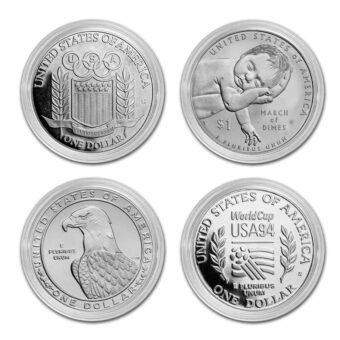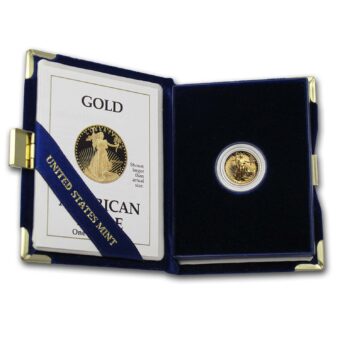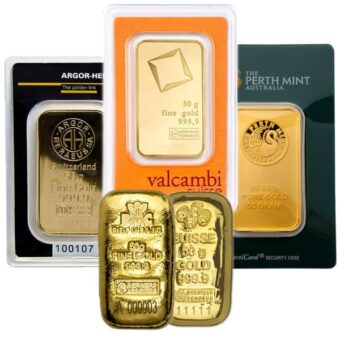

In a world of shifting economic signals and tightening financial conditions, gold continues to affirm its role as a store of enduring value. This past week offered critical developments—from Fidelity’s bold $4,000 gold target to concerning labor market data and stubborn inflation metrics. These signals aren’t just noise—they form a clear narrative for those attuned to tangible wealth. Let’s break down what happened and what lies ahead.
Market Recap: July 28 – August 1, 2025
Monday – 7.28.25
Gold slipped to a two-week low as the dollar strengthened and Treasury yields climbed. August gold settled at $3,307.90, down $27.50, with silver holding near unchanged. A new U.S.–EU trade pact imposing 15% tariffs on European exports, including autos, boosted the dollar while pressuring the euro. Tensions between the U.S. and China also cooled, creating less urgency for haven assets like gold.
Tuesday – 7.29.25
Gold posted modest gains, supported by a rise in crude oil prices and slightly lower Treasury yields. August gold closed at $3,323.00, up $13.10. As the Fed’s policy meeting kicked off, markets looked for signals of easing monetary policy. Fidelity International projected gold could climb to $4,000 by 2026, citing potential rate cuts, central bank purchases, fiscal strains, and dollar weakness—reaffirming gold’s strategic place in diversified portfolios.
Wednesday – 7.30.25
Precious metals pulled back after stronger-than-expected GDP data. Gold dropped to $3,354.70, down $26.20, and silver fell to $37.755. With Q2 growth clocking in at 3%, above forecasts, markets interpreted the data as reducing the odds of immediate rate cuts. Attention turned to the Fed’s policy update and Chairman Powell’s stance heading into fall.
Thursday – 7.31.25
Gold edged lower while silver experienced steeper losses. December gold eased to $3,348.10, down $4.70, while silver slid over $1 to $36.69, affected in part by a sharp copper selloff tied to unexpected tariff exemptions. Central bank gold buying declined by a third from Q1, with 2025 purchases projected at 815 tons—the lowest since 2022.
Friday – 8.01.25
Gold surged $48.60 to $3,397.20 following a weak July jobs report. Payroll gains came in far below expectations, and prior months saw heavy downward revisions. The unemployment rate rose slightly to 4.2%, fueling speculation of a rate cut in September as labor market softness gains attention.
Gold Leaps as Labor Market Cools
Market participants reacted swiftly to a surprisingly soft U.S. employment report, sparking a notable uptick in gold prices. July’s non-farm payroll growth came in at just 73,000—well short of the 106,000 expected. The real eye-opener came in the form of downward revisions to prior months: May and June figures were slashed by a combined 258,000 jobs, recasting recent labor trends in a much weaker light. Spot gold climbed 1.3% to close at $3,333.25, as markets reassessed the trajectory of the broader economy.
This abrupt labor market slowdown could mark a turning point. For months, the job market had been seen as one of the last resilient pillars of economic strength. Now, signs of fatigue are surfacing, which may nudge the Federal Reserve toward a more accommodative stance. In this climate, the case for physical gold strengthens—not just as a reaction to rate speculation, but as a hedge against structural economic softening and the unreliability of short-term data.
Retail Gold Demand Roars Back in Q2
The second quarter of 2025 saw a notable resurgence in gold demand, driven by renewed interest in physical assets despite historically high prices. According to the World Gold Council, global demand rose 3% year-over-year to 1,249 tonnes. The engine behind this growth? A 78% spike in investment demand, fueled by robust bar and coin purchases—marking the strongest first-half showing in over a decade.
China led the charge with a 44% rise in gold investment demand, while Western markets also saw a revival in ETF inflows. Despite a slowdown in central bank purchases—down 21% year-over-year—global appetite for gold remained firmly above historical averages. On the supply side, mine production ticked up modestly by 1%, while recycled gold rose just 4%, reflecting a general reluctance to part with physical holdings.
Even amid market volatility and uncertain policy direction, people continue turning to gold as a store of real value. The enduring demand points to gold’s strategic relevance—not just during crises, but as a foundation for long-term financial security.
Gold Holds Steady Amid Muted Inflation Data
Despite another month of lukewarm inflation readings, gold maintained its footing above the $3,300 level, highlighting the market’s confidence in the metal’s long-term fundamentals. June’s core PCE—the Federal Reserve’s preferred inflation gauge—rose 0.3% month-over-month, with the annual rate edging up to 2.8%, slightly exceeding estimates. While not an alarming increase, the figures suggest that inflationary pressures remain persistent.
Gold responded with quiet strength, rising 1% to $3,307.80 on the day. This muted yet firm movement signals that market participants are less swayed by individual data releases and more focused on underlying trends: slowing consumer spending, fiscal headwinds, and the likelihood that rate policy will ultimately shift toward easing.
Rather than reacting to daily headlines, gold’s price action reveals a broader confidence in its role as a stabilizer in uncertain economic terrain—where inflation may linger and monetary policy grows increasingly cautious.
Fidelity Sees Gold Climbing to $4,000 by 2026
Fidelity International has released a bold long-term projection, anticipating gold could climb to $4,000 an ounce by the end of 2026. The thesis rests on several pillars: a Federal Reserve trending toward lower interest rates, a weakening dollar, sustained central bank gold accumulation, and mounting global uncertainty.
Though gold cooled slightly from its April highs above $3,500, it remains up over 25% year-to-date—a testament to its continued relevance in a turbulent financial environment. Fidelity’s Ian Samson views the recent price dip not as a peak, but as an opportunity. Some portfolios have reportedly doubled their gold allocation, moving from 5% to 10%, in anticipation of seasonal market softness and accommodative policy shifts.
In their view, gold is entering a new super-cycle, propelled by macroeconomic imbalances and renewed strategic interest. While forecasts vary, the broad consensus among certain institutions is that gold remains a key anchor in today’s evolving financial landscape—especially as traditional market assumptions continue to be tested.
Next Week’s Economic Calendar: August 4–8, 2025
Monday, August 4
None scheduled
Tuesday, August 5
- 9:45 AM ET – S&P Final U.S. Services PMI (July): Reflects service-sector momentum. Weak results could boost metals.
- 10:00 AM ET – ISM Services Index (July): A soft reading could reinforce demand for gold and silver.
Wednesday, August 6
None scheduled
Thursday, August 7
- 8:30 AM ET – Initial Jobless Claims (Week Ending August 2): Higher claims may increase interest in haven assets.
- 10:00 AM ET – Speech from Atlanta Fed President Raphael Bostic: Watch for policy tone—dovish comments may support metals.
- 3:00 PM ET – Consumer Credit (June): Slower credit expansion could signal caution and bolster support for physical assets.
Friday, August 8
None scheduled
Impact on Precious Metals
- S&P Final U.S. Services PMI (Tuesday):
Strong service activity may signal economic resilience, potentially limiting demand for gold and silver. A weaker print could support metals on expectations of slowing growth. - ISM Services Index (Tuesday):
A solid reading could reduce haven demand as risk appetite grows. Conversely, a weaker number may drive gold and silver higher as caution returns. - Initial Jobless Claims (Thursday):
An uptick in unemployment claims could highlight labor softness, lending support to gold and silver as market participants seek protection. Lower claims may apply downward pressure on metals. - Atlanta Fed Speech (Thursday):
Hawkish remarks could temper precious metal momentum by signaling tighter monetary conditions. Dovish language may offer a tailwind for gold and silver prices. - Consumer Credit (Thursday):
Rising credit usage suggests strong consumer spending, which may reduce safe-haven demand. Sluggish borrowing growth might enhance the case for metals as financial prudence gains traction.
Final Thoughts
Gold continues to reflect the growing discontent with monetary manipulation and economic imbalances. As markets digest weaker job growth, slowing credit expansion, and persistent inflation, tangible assets like gold remain a cornerstone of prudent wealth preservation.
Ready to explore how physical gold and silver can help protect your purchasing power? Visit PrimeAssetGroup.com or call (866) 706-8781 to speak with a specialist. Orders over $5,000 receive free shipping and insurance.