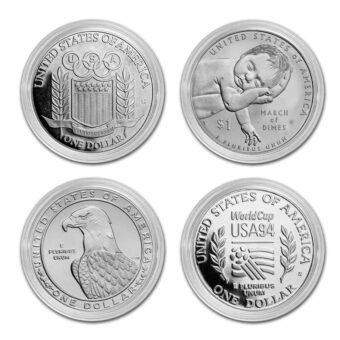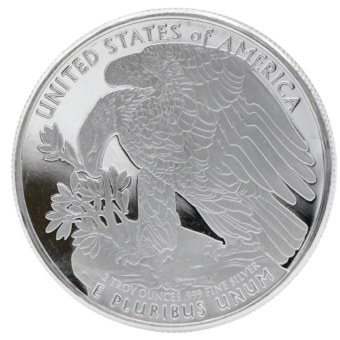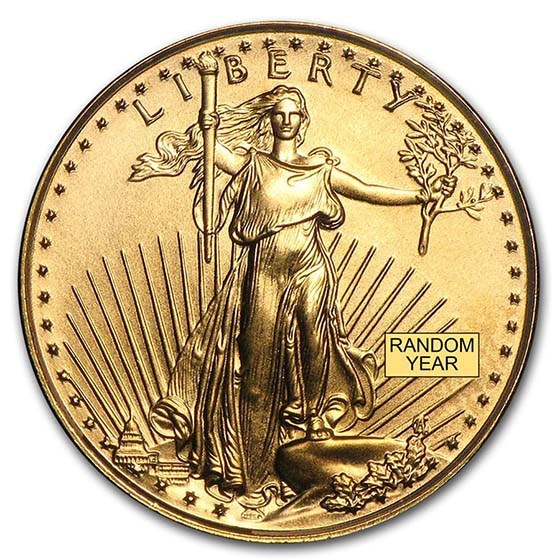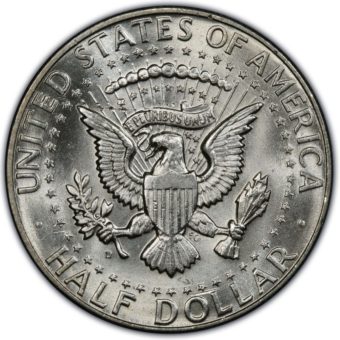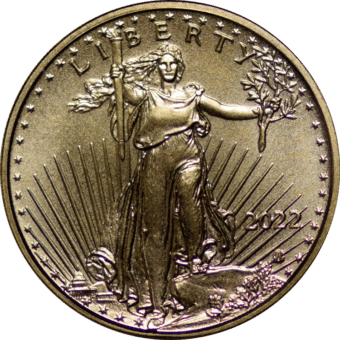

After early session volatility tied to monetary policy expectations, gold and silver found strength as the Federal Open Market Committee delivered a quarter‑point rate reduction with a clearly accommodative stance. By week’s close, a softer U.S. dollar and signals of easier financial conditions helped gold settle in the mid‑$4,300s and pushed silver to new record levels just below $65. In the coming week, market participants will turn their attention to the U.S. Jobs Report and Consumer Price Index—data that has clear implications for monetary policy expectations and the appeal of physical precious metals.
Monday (12.08.25): Metals Pause Ahead of Policy
Gold and silver began the week with modest declines as markets weighed the possibility of a more cautious Federal Reserve outlook—despite broad anticipation of a rate cut. Midday activity saw gold around $4,215 and silver near $58.28. The longer‑term demand backdrop remains firm, highlighted by continued central bank acquisition of physical gold in China and increased global institutional buying.
Tuesday (12.09.25): Silver Extends Gains
On Tuesday, gold and silver maintained upward momentum, with silver briefly reaching around $61.055 and gold near $4,244. Traders remained engaged with metals as the Fed’s policy meeting commenced and confidence in a rate adjustment remained high. The combination of policy anticipation and steady demand supported the metals’ performance.
Wednesday (12.10.25): Post‑Cut Consolidation
Following a widely expected quarter‑point rate cut, gold held near $4,235 and silver around $61, slightly off earlier peaks. The Federal Reserve lowered its target range to 3.5%–3.75% but emphasized that inflation pressures still warrant thoughtful consideration. Market participants focused on the accompanying press conference for insight into future policy pacing.
Thursday (12.11.25): Dovish Signals Boost Hard Assets
Gold and silver advanced Thursday as a dovish policy tone and a retreating U.S. dollar underscored demand for tangible stores of value. Gold approached $4,290, while silver climbed above $64. The Fed’s third consecutive rate reduction and commencement of daily Treasury bill purchases supported broader liquidity and enhanced the appeal of physical precious metals.
Friday (12.12.25): Soft Dollar, Strong Metals
Gold reached a seven‑week high near $4,369, and silver established fresh records just under $65 as the U.S. dollar continued its weekly descent. With the Federal Reserve signaling a lack of urgency to raise rates, people globally have responded favorably to hard assets. Equities showed mixed performance late in the week, even as geopolitical developments continued to shape macro awareness.
Fed Delivers Third Rate Cut—Signaling Cautious Path Ahead
The big picture
This week’s Federal Reserve meeting resulted in a third consecutive rate reduction, bringing the target federal funds rate to 3.5%–3.75%. While inflation remains above the central bank’s 2% target, policymakers balanced growth considerations with price stability concerns.
Driving the news
The Fed’s 25‑basis‑point move reflected a 9–3 vote, indicating varying views within the committee. Chair Jerome Powell underscored the challenge of navigating labor market shifts and persistent price pressures as the central bank adjusts its policy stance.
By the numbers
• 25 bps: Amount of the latest rate cut
• 3.5%–3.75%: Current target range
• 3: Consecutive meetings with reductions
• 3 dissenters: Two preferred no cut; one advocated a larger reduction
• 75.6%: Market‑implied odds of no change in January (CME FedWatch)
Why it matters
The messaging suggests policymakers are approaching a more measured phase of easing. With rates near neutral, future adjustments may depend more heavily on incoming economic data.
What to watch
Upcoming labor and inflation figures will be closely watched for signals on future policy direction.
The bottom line
The Fed eased again but emphasized a data‑dependent outlook, balancing labor dynamics and inflation readings.
Silver Breaks $60 — Near‑Term Dynamics Evolve
The big picture
Silver’s rise above $60 has been notable, reflecting strong technical interest and industrial demand. However, shifts in supply and demand dynamics may introduce variability in price action.
Driving the news
Robust industrial usage and renewed preference for physical allocation have supported silver’s advance. At the same time, some inventory rebuilding and shifting seasonal demand may influence short‑term patterns.
By the numbers
• ~$60.72: Spot silver price
• 100%+: Year‑to‑date gains
• ~69: Gold/silver ratio
• ~1,447 tonnes: LBMA silver stock increase year to date
• ~4,311 tonnes: Comex silver inventory increase year to date
• ~78%: Share of LBMA vault silver in silver‑backed ETPs
Why it matters
Strong interest in silver continues, but as supply metrics evolve and markets balance physical demand with inventory trends, short‑term price swings may arise.
What to watch
Attention will center on inventory flows and sector reports, including critical minerals developments that could influence next phases of demand.
The bottom line
Silver’s underlying trend remains intact, even as markets digest evolving supply and demand signals.
BRICS’ Gold Buying Trends Mark Shifting Reserve Strategies
The big picture
Central banks in BRICS nations have nearly doubled their gold reserves since 2020, contrasting with more modest increases in Western holdings. This reflects a broader rebalancing of how countries approach reserve diversification.
Driving the news
BRICS nations have been adding physical gold at a notable pace, increasing gold’s share of total reserves significantly. While Western holdings have also appreciated in value, that growth has been driven primarily by price movement rather than active accumulation.
By the numbers
• ~102%: Increase in BRICS gold holdings since 2020
• ~12%: Approximate increase in Western gold holdings
• ~2,330 tonnes: Russia’s gold reserves
• ~2,304 tonnes: China’s gold reserves
• ~166 tonnes: Q2 2025 central bank purchases
• ~41%: Above historical quarterly average (World Gold Council)
Why it matters
This trend highlights how different regions are positioning their reserve strategies. Accumulation of physical gold by BRICS countries supports diversification and monetary resilience.
What to watch
Future reserve activity and how it interfaces with cross‑border trade agreements and payment systems.
The bottom line
The expanded role of gold in strategic reserves reflects enduring relevance as a tangible asset in a globalized financial environment.
Americans Lead Developed Nations in Food Security Awareness
The big picture
Data shows that concern about food and water security remains elevated in the U.S. relative to other developed economies—driven by price pressures, supply considerations, and broader economic factors.
Driving the news
While European countries saw spikes in concern during earlier global disruptions, U.S. awareness has remained comparatively high. Factors such as grocery inflation and supply‑chain considerations continue to shape perceptions.
By the numbers
• 23%: UK/Italy respondents citing food and water security as a major issue
• 20%: France
• 16%: Spain
• 13%: Germany
• U.S.: Among the highest concern levels in 2025
Why it matters
Persistent awareness of food and water security in an advanced economy underscores how households process economic signals and plan for long‑term stability.
What to watch
Grocery price trends, climate impacts on supply, and changes in public support programs.
The bottom line
Food security remains top of mind in the U.S., and tracking related trends offers insight into economic sentiment and resource planning.
Next Week’s Key Events
Economic Calendar: December 15 – 19, 2025 (ET)
MONDAY, Dec. 15
• 8:30 am — Empire State Manufacturing Survey (Dec.)
TUESDAY, Dec. 16
• 8:30 am — U.S. Jobs Report (Employment Situation Summary) (Nov.)
• 8:30 am — U.S. Retail Sales (Oct.)
• 9:45 am — S&P Flash U.S. Services PMI (Dec.)
• 9:45 am — S&P Flash U.S. Manufacturing PMI (Dec.)
WEDNESDAY, Dec. 17
• None scheduled
THURSDAY, Dec. 18
• 8:30 am — Initial Jobless Claims (Dec. 13)
• 8:30 am — Consumer Price Index (Nov.)
• 8:30 am — Philadelphia Fed Manufacturing Survey (Dec.)
FRIDAY, Dec. 19
• 10:00 am — Existing Home Sales (Nov.)
• 10:00 am — Consumer Sentiment (final) (Dec.)
Impact on Precious Metals Markets
Empire State Manufacturing Survey (Mon, 8:30 am ET)
• Strong reading → signals growth momentum and firmer yields; can temper metals’ appeal.
• Weak or contracting reading → suggests softer growth expectations; supportive for gold/silver.
U.S. Jobs Report (Tue, 8:30 am ET)
• Strong job gains/wage growth → reinforces expectations of steady policy; can weigh on hard assets.
• Slower jobs or wages → supports easing expectations; positive for metals.
U.S. Retail Sales (Tue, 8:30 am ET)
• Strong spending → suggests durable demand and inflation persistence; less favorable for metals.
• Weak spending → reflects slowing activity; supportive for hard assets.
S&P Flash U.S. Services & Manufacturing PMI (Tue, 9:45 am ET)
• Expansion readings → signal economic resilience; tends to support yields and the dollar.
• Contraction signals → highlight slowing activity; supportive for physical metals.
Initial Jobless Claims (Thu, 8:30 am ET)
• Rising claims → softer labor trends; supportive for gold/silver.
• Falling claims → stronger labor conditions; can temper metals’ advance.
Consumer Price Index (Thu, 8:30 am ET)
• Sticky/higher inflation → reduces confidence in easing; less supportive for metals.
• Cooling inflation → increases confidence in future rate cuts; positive for precious metals.
Philadelphia Fed Manufacturing Survey (Thu, 8:30 am ET)
• Strong reading → signals regional strength; can weigh on metals.
• Weak reading → suggests factory sector stress; supportive for defensive assets like gold/silver.
Existing Home Sales (Fri, 10:00 am ET)
• Strong sales → reflects housing demand stability; can temper metals’ appeal.
• Weak sales → signals higher‑rate pressures; supportive for metals.
Consumer Sentiment (Fri, 10:00 am ET)
• Improving confidence → highlights resilience; can temper metals’ relative appeal.
• Deteriorating sentiment → supports safe‑haven demand for tangible assets.
Continue the Journey with Prime Assets
Understanding how macro data and policy trends interact with precious metals can enhance clarity in turbulent times. Visit the Prime Assets website to explore deeper insights, educational resources, and ongoing analysis that help people refine their approach to real wealth in gold and silver.