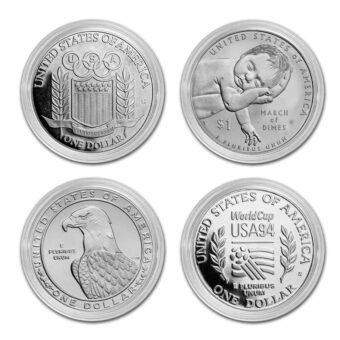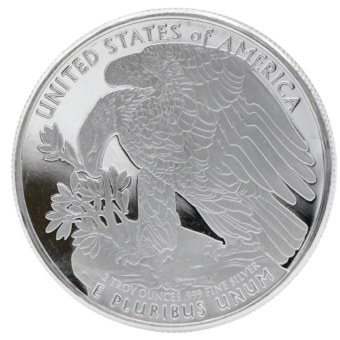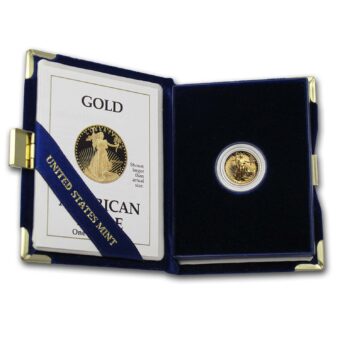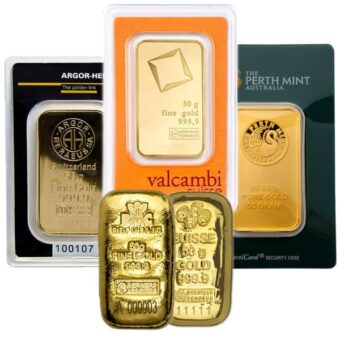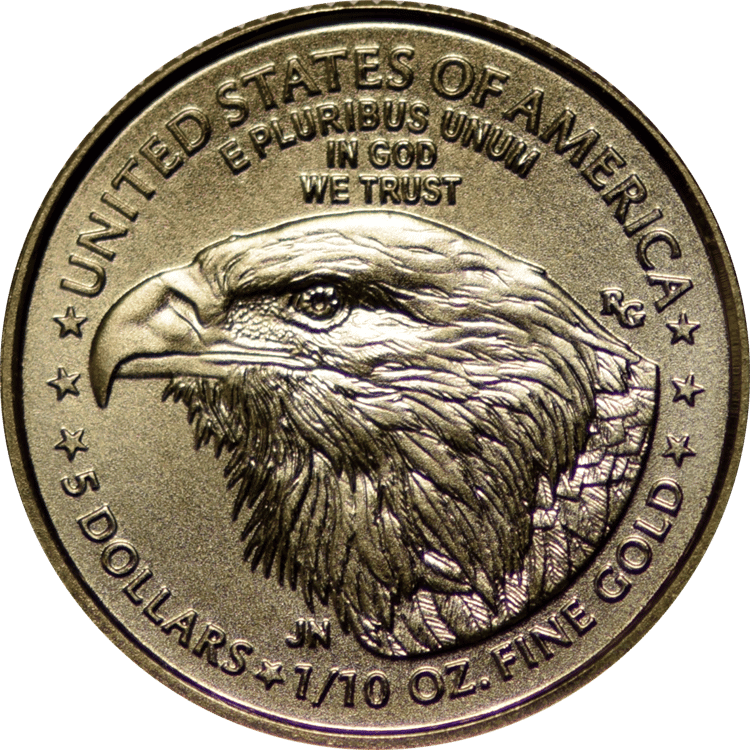

Markets are sending mixed signals—and when uncertainty rises, clarity matters. This week’s price action in gold and silver wasn’t just noise; it reflected deeper tensions between inflation, policy direction, and global stability. The precious metals outlook leading jobs report underscores how investors are closely watching economic signals for direction in an otherwise uncertain environment. For investors focused on long-term purchasing power—not short-term speculation—this is exactly the kind of environment where disciplined strategy becomes essential.
Monday (4.27.26)
Gold and silver opened the week under pressure, as technical weakness and short-term selling weighed on prices—June gold fell $24 to $4,717, while May silver slipped $0.80 to $75.60. Markets are balancing geopolitical developments, including renewed discussions around the Strait of Hormuz, alongside a full slate of central bank decisions. With the Federal Reserve and other major institutions expected to hold rates steady, attention remains on energy-driven inflation risks. Leadership transitions at the Fed are also beginning to enter the conversation, adding another layer of uncertainty.
Tuesday (4.28.26)
Selling intensified as a stronger dollar and rising Treasury yields pushed metals lower—June gold dropped $107 to $4,586, while silver declined $2.25 to $72.78. As the Federal Open Market Committee convened, expectations remained anchored around steady rates. In this environment, non-yielding assets like gold and silver often face short-term headwinds, particularly when confidence in fiat stability appears firm.
Wednesday (4.29.26)
Metals continued to soften ahead of the Fed’s decision, with gold down $36 to $4,572 and silver off $1.62 to $71.59. While higher yields and persistent inflation reduced immediate demand, a more subtle trend continues beneath the surface: central banks are steadily accumulating gold. According to the World Gold Council, net purchases reached 244 tons in Q1—highlighting ongoing institutional interest in tangible reserves.
Thursday (4.30.26)
A shift emerged midday as a softer dollar brought buyers back—gold rose $67 to $4,629, while silver gained $1.65 to $73.16. Economic data painted a mixed picture, with GDP slightly below expectations but jobless claims reaching historic lows. The Federal Reserve maintained its current stance, though internal divisions and global tensions continue to shape the broader outlook. For disciplined investors, this reinforces the importance of diversification beyond traditional financial instruments.
Friday (5.01.26)
As the week closes, markets remain in a holding pattern. Gold eased modestly to around $4,594, while silver showed relative strength near $74.50. A softer dollar and easing yields offered some support, but conviction remains limited ahead of key economic data. With inflation still elevated and central banks maintaining a cautious tone, the push-and-pull dynamic continues—underscoring the importance of long-term positioning over short-term reaction.
Inflation Remains Elevated as Policy Stays Restrictive
The big picture
Inflation continues to run above target levels, reinforcing the challenge policymakers face in balancing economic growth with price stability.
Driving the news
The Federal Reserve’s preferred inflation gauge—March PCE—came in above expectations, signaling that price pressures remain persistent.
By the numbers
- +0.7% — monthly headline PCE
- 3.5% — year-over-year headline PCE
- +0.3% — monthly core PCE
- 3.2% — year-over-year core PCE
- 3.6% — personal savings rate
Why it matters
Persistent inflation affects purchasing power and limits the flexibility of central banks to ease policy—an environment where hard assets have historically played a stabilizing role.
What to watch
- Upcoming inflation reports (PCE, CPI)
- Energy price trends
- Consumer spending and savings behavior
- Labor market resilience
- Federal Reserve guidance
The bottom line
Inflation remains a defining factor in today’s economic landscape, reinforcing the value of assets that are not tied to monetary expansion.
Silver’s Upside Potential Gains Attention
The big picture
Silver continues to attract interest as both an industrial metal and a monetary asset, with tightening supply dynamics supporting long-term potential.
Driving the news
Declining inventories and shifts in the silver-to-gold ratio are being closely monitored as indicators of future price movement.
By the numbers
- 62.21 — current silver-to-gold ratio
- <40 — prior bull market level
- <20 — historical extreme
- $258 — implied upside scenario
Why it matters
Supply constraints combined with sustained demand can amplify price movements, particularly in markets where physical availability becomes a factor.
What to watch
- COMEX inventory levels
- Ratio movement relative to gold
- Industrial demand trends
- Broader commodity cycles
- Physical supply conditions
The bottom line
Silver’s dual role positions it uniquely—especially in environments where both industrial demand and monetary concerns intersect.
Gold and the Shift in Global Reserves
The big picture
Gold continues to play a growing role in global reserve strategies as countries diversify away from reliance on any single currency.
Driving the news
Central banks, particularly in emerging markets, are increasing gold holdings as part of long-term reserve management.
By the numbers
- 225M oz — added to reserves since 2008
- ~60% → ~40% — U.S. dollar share decline
- 30% → 40% — projected gold reserve share
- $8,000 — long-term price scenario
Why it matters
Diversification of reserves reflects broader structural changes in the global financial system—highlighting gold’s enduring role as a neutral asset.
What to watch
- Central bank purchasing trends
- Reserve allocation shifts
- Geopolitical developments
- Currency stability dynamics
- Gold’s performance during market stress
The bottom line
Gold’s long-term relevance is rooted in its independence from monetary systems—making it a cornerstone of strategic asset allocation.
Debt Levels and Market Stability
The big picture
Rising global debt continues to be a key variable in assessing long-term financial stability.
Driving the news
Concerns from major financial leaders point to the potential for market-driven adjustments if current trends persist.
By the numbers
- $1.7T — private credit market size
- 2022 — U.K. gilt market stress example
- Multi-factor risk — debt, energy, geopolitics
Why it matters
Debt dynamics influence interest rates, liquidity, and overall market confidence—factors that directly impact portfolio resilience.
What to watch
- Government borrowing trends
- Bond market conditions
- Central bank responses
- Credit cycle developments
- External economic shocks
The bottom line
Maintaining balance in an evolving financial landscape requires awareness of structural risks—and thoughtful diversification.
Next Week’s Key Events
Economic Calendar: May 4 – May 8, 2026 (ET)
MONDAY, MAY 4
• 12:50 pm — New York Fed President John Williams speech
TUESDAY, MAY 5
• 10:00 am — JOLTS report
• 10:00 am — New home sales
• 10:00 am — ISM services
WEDNESDAY, MAY 6
• 8:15 am — ADP employment
• 1:00 pm — Fed speech
THURSDAY, MAY 7
• 8:30 am — Jobless claims
• 3:00 pm — Consumer credit
• 3:30 pm — Fed speech
FRIDAY, MAY 8
• 8:30 am — Jobs Report
• 10:00 am — Consumer sentiment
• 7:30 pm — Fed panel
Impact on Precious Metals Markets
Each of these events provides insight into the broader economic direction:
- Strong labor data → reinforces tighter policy expectations; can weigh on metals short term
- Weak labor data → increases potential for policy easing; supportive for metals
- Hawkish Fed tone → signals prolonged higher rates
- Dovish Fed tone → suggests flexibility and potential easing
Understanding these signals helps investors position thoughtfully rather than react emotionally.
Final Thoughts
Short-term volatility often distracts from long-term fundamentals. While markets continue to react to data releases and policy signals, the underlying themes remain consistent: inflation persistence, global diversification, and the search for stability.
Physical gold and silver have historically served as anchors in uncertain environments—not as speculative trades, but as enduring stores of value.
Continue the Conversation
If you’re looking to better understand how precious metals can support a disciplined, long-term strategy, we invite you to continue exploring.
Visit our website to access deeper insights, educational resources, and guidance designed to help you make informed decisions in today’s evolving financial landscape.